Dear friend,
In 2024, US power customers went an average of 11 hours without electricity. That is almost twice the yearly average of the ten years before, and hurricanes caused most of it.
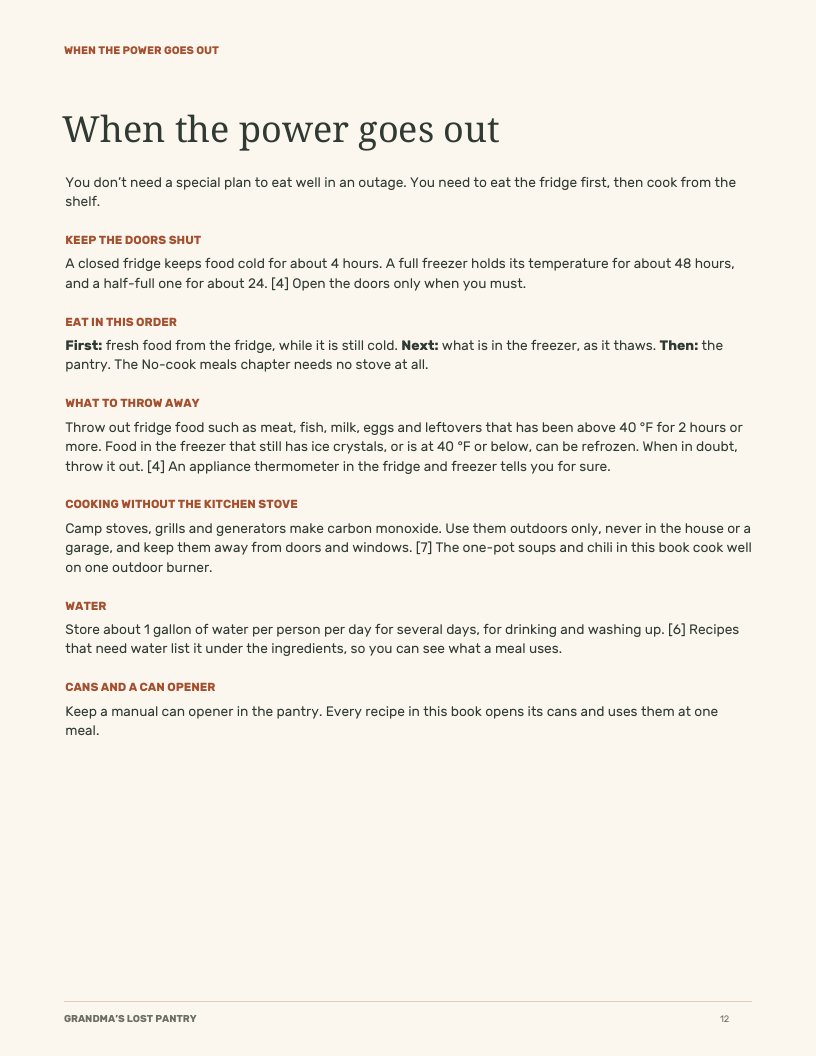
A closed fridge keeps food safe for about 4 hours. After that, the meat, milk and leftovers go in the trash.
The Red Cross says to keep two weeks of food at home. In 2023, fewer than half of US adults told FEMA they had put supplies together.
My grandmother knew how to feed a family from a shelf. She lived through Spain’s civil war and the hungry years after it, when food was rationed until 1952. Her kitchen ran on a full shelf and a few habits: buy what keeps, use the oldest first, waste nothing.
Those habits fed her family. They can feed yours too, starting tonight.
Sources: US Energy Information Administration, Dec 2025; FoodSafety.gov; American Red Cross; FEMA 2023 National Household Survey; Público, 2 April 2009.
In her kitchen, nothing went to waste. Yesterday’s bread became torrijas. A little milk, flour and lemon became a stack of soft, tender panqueques, barely golden, hot with sugar on top.
She didn’t call it a system. It was just how a kitchen worked: buy what keeps, cook it slowly, use everything.
Most of us were never taught those habits. When the supermarket arrived and the shelf was always full, they slowly disappeared.
This book brings them back, with 50 dinners to cook from them.
Why the old habits matter again
It wasn’t the recipes. It was the habits.
Buy what keeps. Cook it slowly. Make tomorrow’s dinner from tonight’s leftovers. Soak the beans the night before. Let the bread rise while you sleep.
Somewhere along the way we swapped all of that for a store run and a takeout menu. It works, until the store is out of bread before a storm, the power goes out on a Wednesday night, or the grocery bill climbs again.
A full pantry was never only about the past. It is the calmest kitchen there is.
Five grandmothers, one pantry
This book gathers the dinners grandmothers made from the shelf in five kitchens. The Italian nonna’s pasta e ceci. The Mexican abuela’s pot of frijoles and her toasted noodle soup. The Southern grandmother’s Hoppin’ John and salmon croquettes. The Polish babcia’s barley and mushroom krupnik. The corned beef of Irish-American kitchens.
They’re our own pantry versions of dishes that have been made for generations, written for today’s kitchens and today’s food-safety rules. No invented family secrets. Just good, old dinners, and the reasons they work.
And one chapter is our own family’s: my grandmother’s tortilla española, torrijas and panqueques from Galicia, in the north of Spain, and my great-grandmother’s masitas from Cordenons, in Friuli, northern Italy.
Grandma’s Lost Pantry
50 recipes from the shelf. No fresh food needed.
Every counted ingredient keeps in the cupboard until you open it: dry beans and grains, pasta, cans, jars and cartons. Next to the grandmothers’ dishes are everyday pantry dinners for a busy week: chicken burrito bowls, tuna noodle skillet, three-bean chili.
Grandmothers’ kitchens
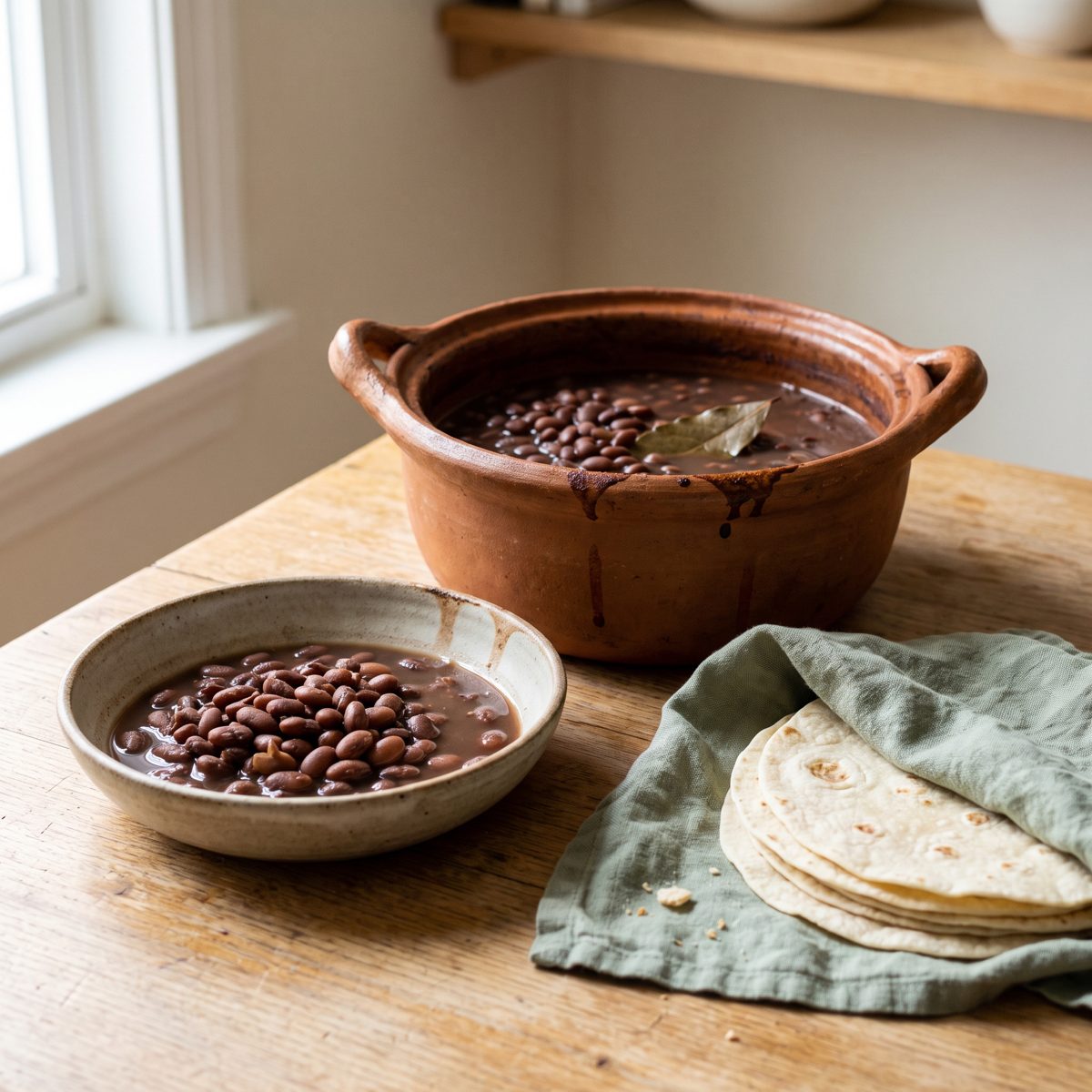
Frijoles de la olla
7 recipes · Mexican, Italian, Southern, Polish
Pozole, pasta e ceci, Hoppin’ John, krupnik
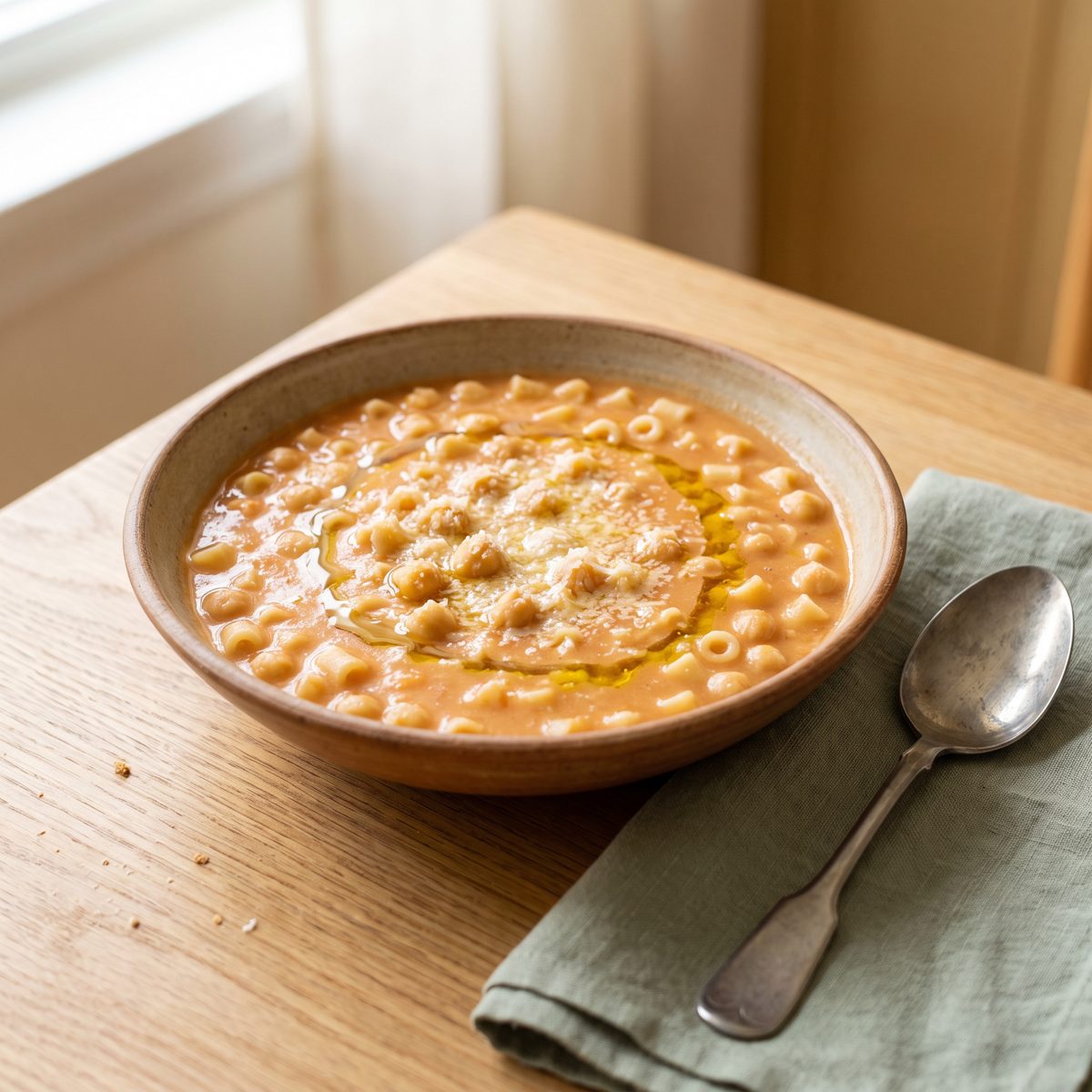
Pasta and beans
Pasta e fagioli
13 recipes · rice, beans and pasta
Red beans and rice, lentil bolognese
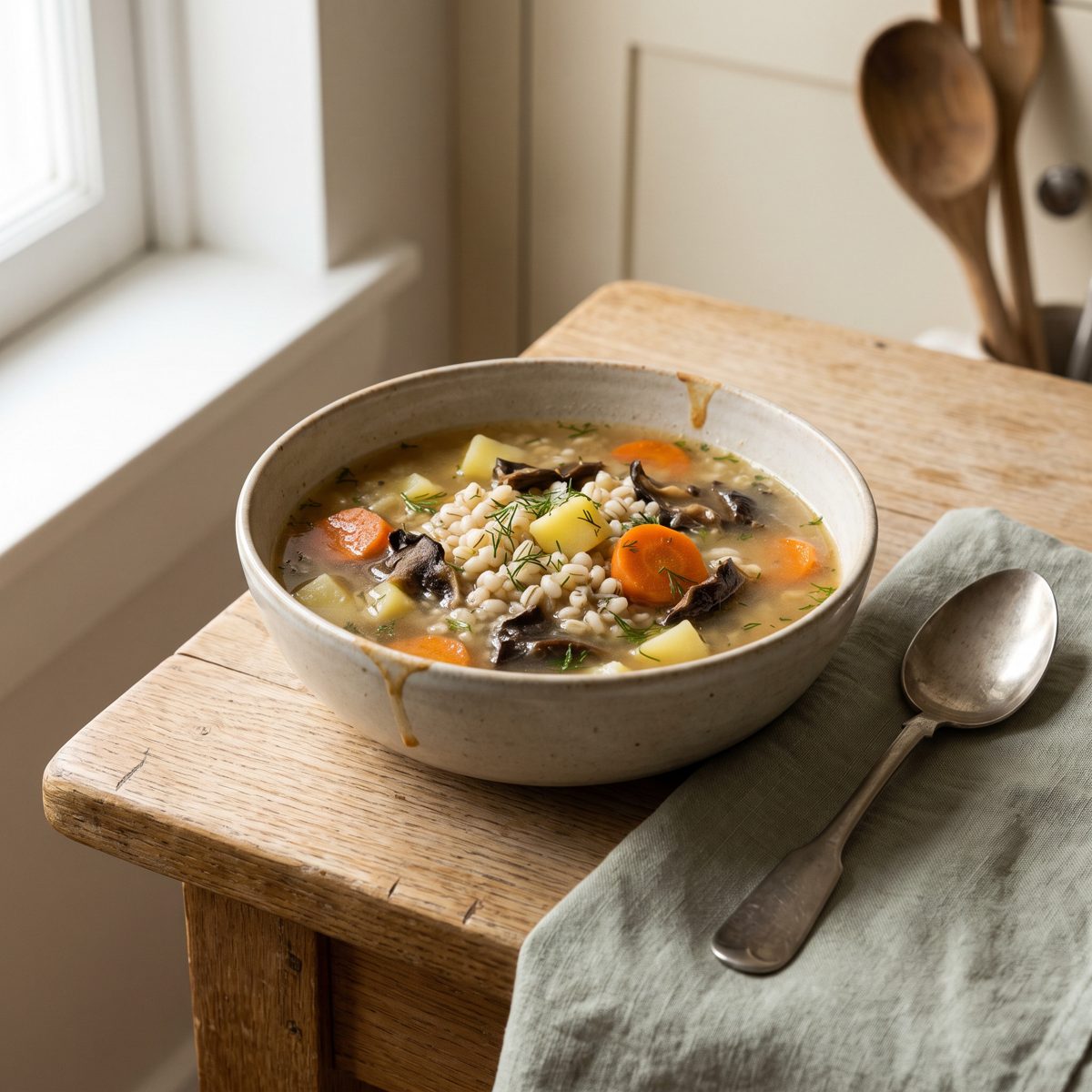
Soups and stews
Krupnik barley soup
One pot each · leftovers for lunch
Black bean soup, minestrone, chicken corn chowder
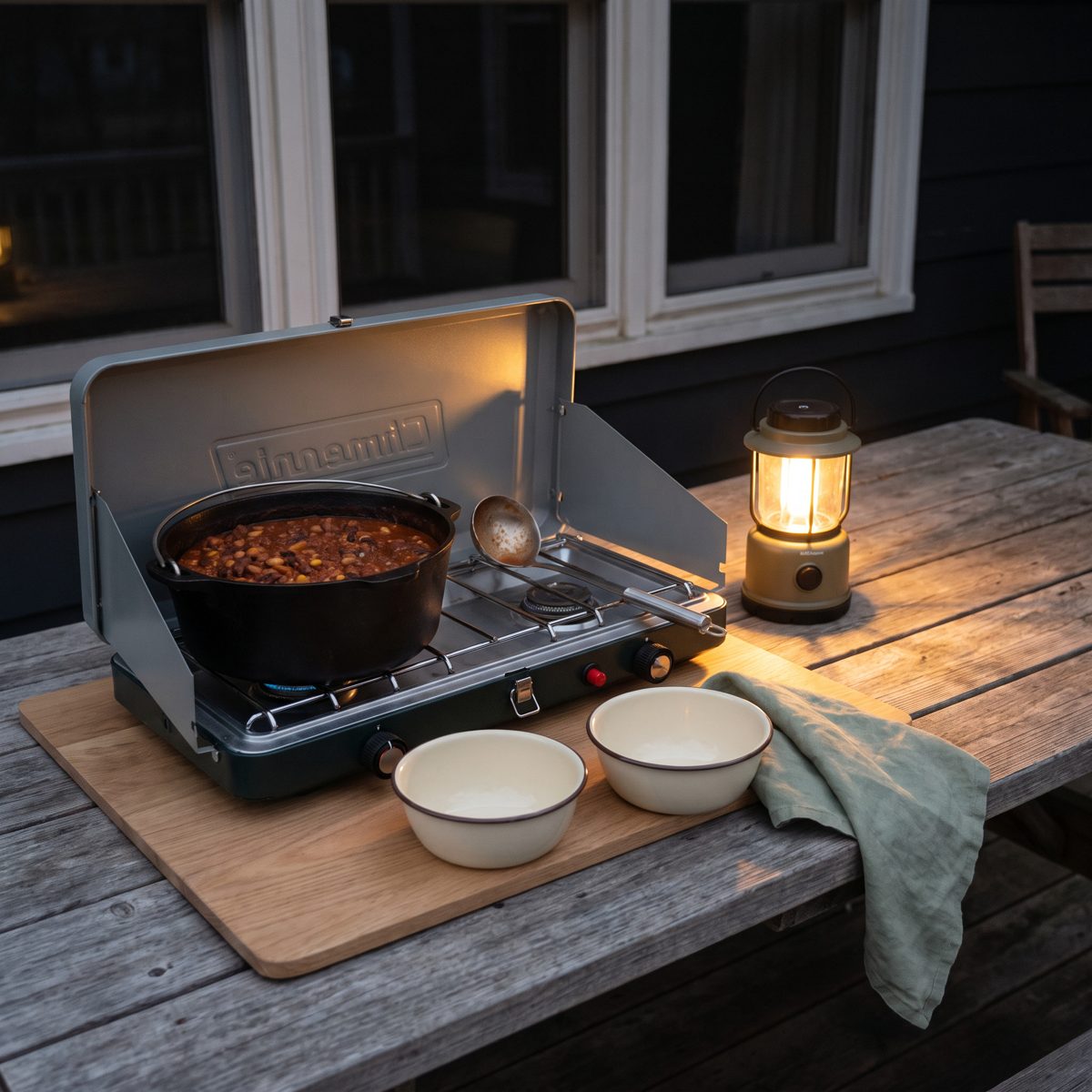
A day with no power
Tuna and white bean salad
6 no-cook meals · open, mix, eat
Plus 4 breakfasts from the shelf
The old ways, and what they really do
Some kitchen knowledge was passed hand to hand for generations and is rarely taught now. None of it is magic. The book explains what each one actually does, with sources:
- Corn cooked with lime. Why the hominy in pozole looks the way it does, and why corn tortillas hold together.
- Beans soaked and slow-cooked. Why grandmothers soaked them overnight, and why a gentle simmer gives creamy beans and a broth worth drinking.
- Bread that rises slowly. What a sourdough starter is, and why a long rise tastes better.
- Cabbage turned into sauerkraut, and the root cellar. How families kept the fall harvest through the winter.
- Salt and fat. How meat was kept before refrigerators, and why we let the cannery do it now.
Here’s one recipe, straight from the book
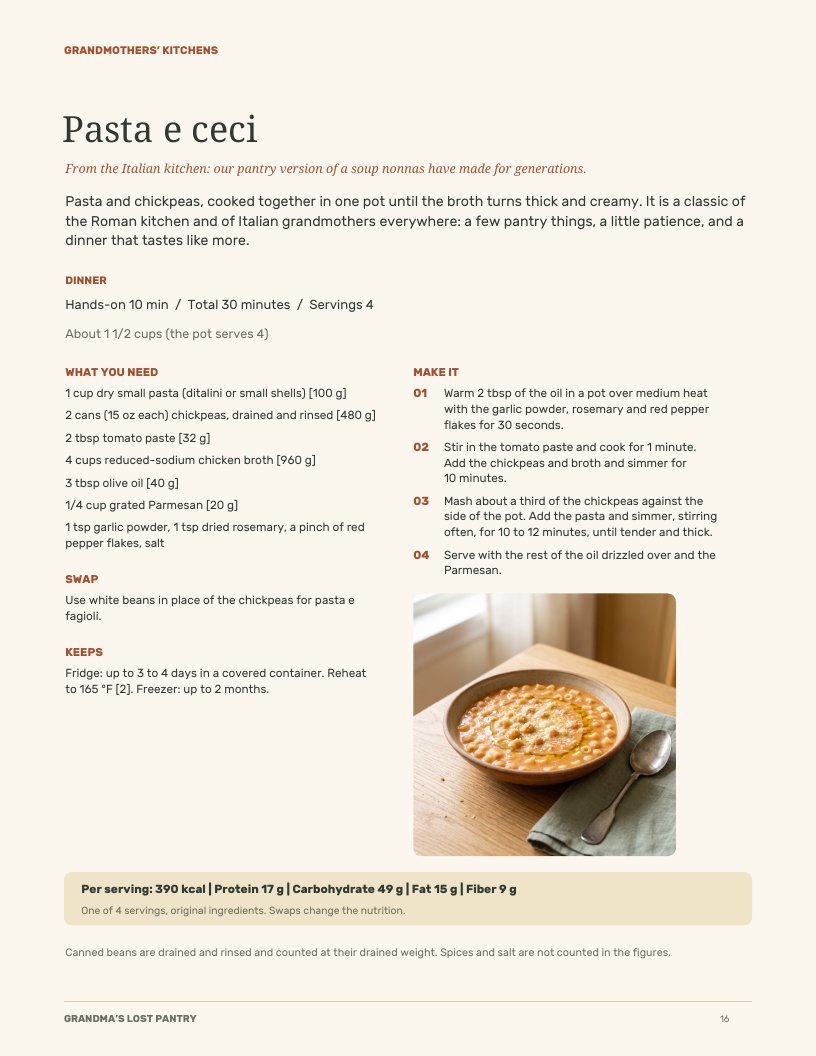
Pasta e ceci. Serves 4. 30 minutes. A classic of the Roman kitchen.
| Small pasta (ditalini or small shells) | 1 cup |
|---|---|
| Chickpeas, drained and rinsed | 2 cans (15 oz each) |
| Tomato paste | 2 tbsp |
| Reduced-sodium chicken broth | 4 cups |
| Olive oil | 3 tbsp |
| Grated Parmesan | 1/4 cup |
| Per serving | 390 kcal · 17 g protein |
Warm the oil with garlic and rosemary, stir in the tomato paste, then the chickpeas and broth. Mash a third of the chickpeas so the broth turns creamy, cook the pasta right in the pot, and finish with olive oil and Parmesan. Six things from a shelf, and it tastes like an afternoon’s work.
Every figure in the book is worked out from USDA food data, recipe by recipe, and printed on every page.
And a plan for the whole month
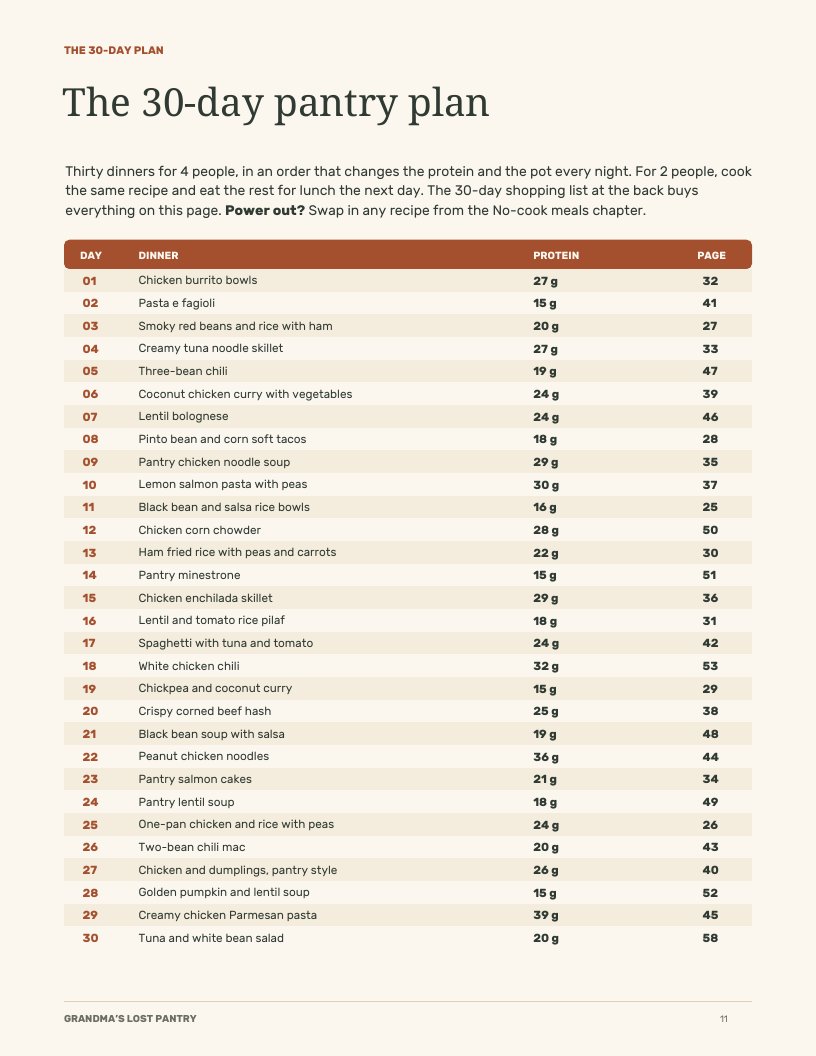
- The 30-Day Pantry Plan. A dinner for every day of the month. For two people, the leftovers become tomorrow’s lunch, the way grandmothers planned it.
- One shopping list for all 30 days. Counted in cans, bags and jars, the way the store sells them.
- The Cupboard Index. Look up what’s on your shelf and find tonight’s dinner and its page.
- When the Power Goes Out. USDA’s numbers: a closed fridge keeps food safe for about 4 hours, a full freezer about 48. What to cook first, and what to toss.
$27 once · Instant download · Print it tonight
Here’s everything you get
A cookbook alone can still sit on the shelf. So each piece below answers one reason a pantry goes unused.
The core
Grandma’s Lost Pantry: 50 recipes
The grandmothers’ kitchens chapter, our own family’s recipes, then rice and beans, canned chicken, tuna and salmon, pasta night, soups and chili, breakfast from the shelf, and no-cook meals. A photo, nutrition and a swap on every recipe.
Value $27
Bonus 1 · for “How did they make it last?”
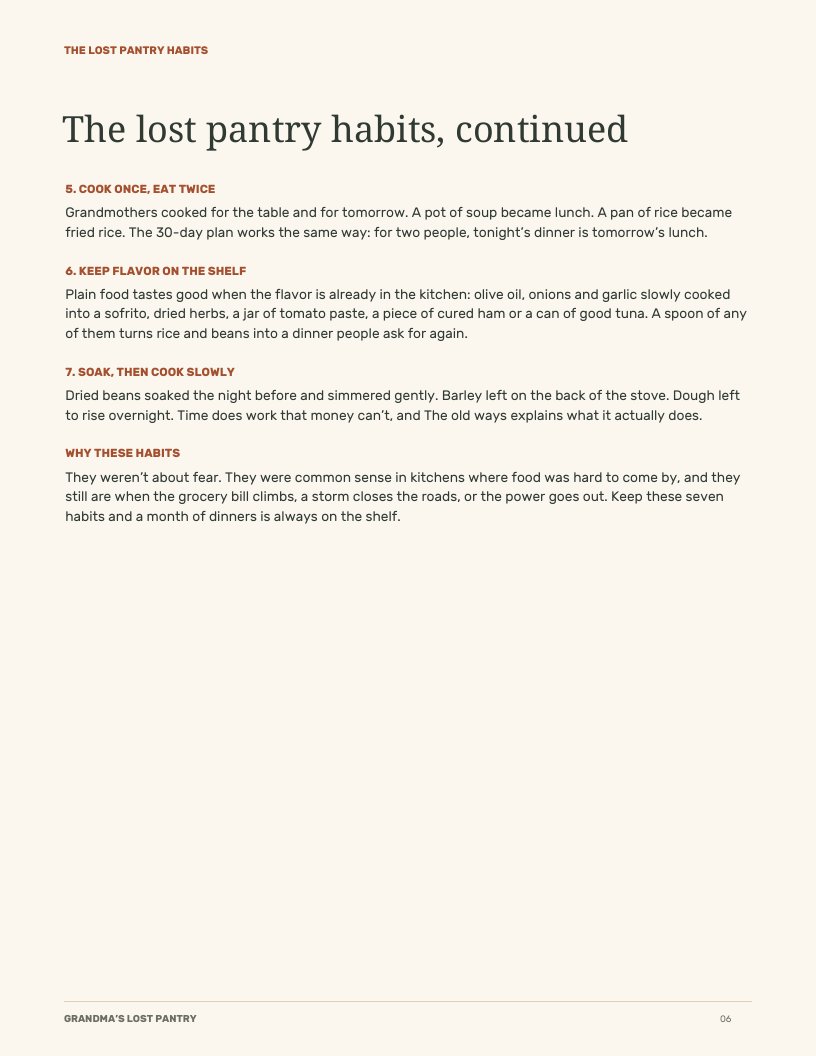
The Lost Pantry Habits and The Old Ways
Seven habits that got our grandmothers through hard times, five grandmothers’ pantries, and what nixtamal, slow beans, sourdough, sauerkraut and the root cellar really do.
Value $9
Bonus 2 · for “What do I make on day 12?”
The 30-Day Pantry Plan
A dinner for every day of the month, so you never have to choose on a hard night.
Value $9
Bonus 3 · for “What do I actually buy?”
The 30-Day Shopping List
Every can, bag and jar for the whole plan, counted the way the store sells them.
Value $7
Bonus 4 · for “I have this can. Now what?”
The Cupboard Index
Find a recipe by what’s on your shelf, with its page number.
Value $7
Bonus 5 · for “The power just went out.”
When the Power Goes Out
The fridge and freezer rules, what to cook first, and how to cook safely with no power.
Value $9
Bonus 6 · for “I’ll forget all this.”
Pantry printables
The Fridge Outage Card for your fridge door and the Pantry Rotation Tracker for the cupboard.
Value $7
See the pages for yourself
These are real pages from the book. Tap any one to open it full size.
So what does it cost?
Add up what’s in the kit:
| Grandma’s Lost Pantry: 50 recipes | $27 |
|---|---|
| Bonus 1: The Lost Pantry Habits and The Old Ways | $9 |
| Bonus 2: The 30-Day Pantry Plan | $9 |
| Bonus 3: The 30-Day Shopping List | $7 |
| Bonus 4: The Cupboard Index | $7 |
| Bonus 5: When the Power Goes Out | $9 |
| Bonus 6: Pantry printables | $7 |
| Total value |
You won’t pay $75. You’ll pay what the cookbook is worth alone, and the six bonuses come with it.
Today, the whole kit is $27, one time.
That’s under 55¢ a recipe, with a month of dinners already planned. No subscription, ever.
- 7-day money-back guarantee. Cook three dinners from your cupboard this week. If it didn’t help, one email gets every cent back.
- Instant PDF download. On your phone in a minute.
- Secure checkout by Stripe.

Now picture next winter
A pot of beans on the stove on a Sunday afternoon. The kitchen smells the way you remember.
The storm alert comes in, and you don’t join the line at the store. The shelf already holds the month. If the lights go out, the fridge card tells you what to cook first, and the camp stove outside handles the soup.
And on an ordinary Tuesday, when the grocery bill is too high, dinner is already in the cupboard. That’s what our grandmothers knew.
Cook three dinners. Then decide.
Cook three dinners from your cupboard this week. If it didn’t help, one email within 7 days gets every cent back. No forms. No hoops.
Why three? One dinner can’t tell you much. Three can. By then you’ll know if this is how you want your kitchen to work.
So the risk is all ours.